



Awards and Recognitions
Dr M R Rajagopal Receives The Hindu BusinessLine Iconic Change Maker Award 2026 for Palliative Care
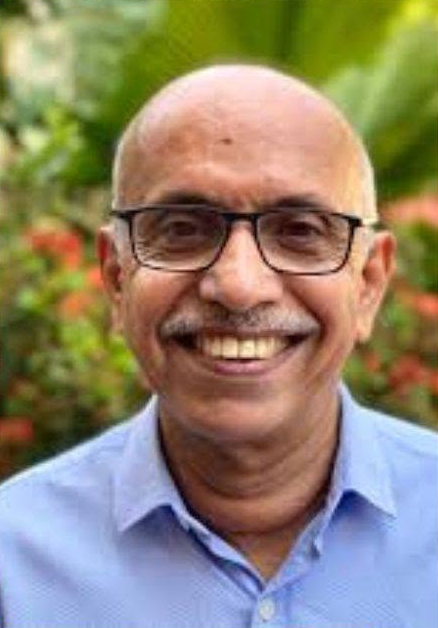
Dr M. R. Rajagopal, a pioneer of palliative care in India and the Founder of Pallium India, received The Hindu BusinessLine Iconic Change Maker Award 2026 for his contribution to palliative care. The award recognises his contribution to expanding palliative care through policy reform, community participation and training, and to integrating palliative care into healthcare.
Dr Rajagopal has worked for decades to make palliative care accessible across India. In 1993, together with colleagues, he established the Pain and Palliative Care Society at the Government Medical College, Kozhikode. Dr Rajagopal founded Pallium India in 2003.
He was instrumental in shaping Keralam’s Palliative Care Policy in 2008. He also led the development of the National Standards for Palliative Care and contributed to the establishment of the National Programme for Palliative Care in 2012. His sustained advocacy contributed to the 2014 amendment of the Narcotic Drugs and Psychotropic Substances (NDPS) Act, which improved legal access to morphine. Pallium India’s training programmes continue to provide palliative care education to professionals and volunteers across the country. His work has brought relief and dignity to countless individuals and families.
Ms Poonam Bagai (Vice-Chairman of Pallium India and founder chairman of CanKids) attended the award ceremony held on 22 September 2026 in New Delhi and accepted the award from Ms Nirmala Sitharaman (Minister of Finance and Corporate Affairs) on behalf of Dr M R Rajagopal.
We extend our heartfelt congratulations to Dr M R Rajagopal on receiving the Iconic Changemaker Award 2026. This recognition is richly deserved, and it inspires all of us in the palliative care community to carry his work forward. Thank you, Dr Rajagopal, for lighting the way.
Pain and Palliative Care Society, Thrissur Receives Recognition from Indian Cancer Society, Bangalore
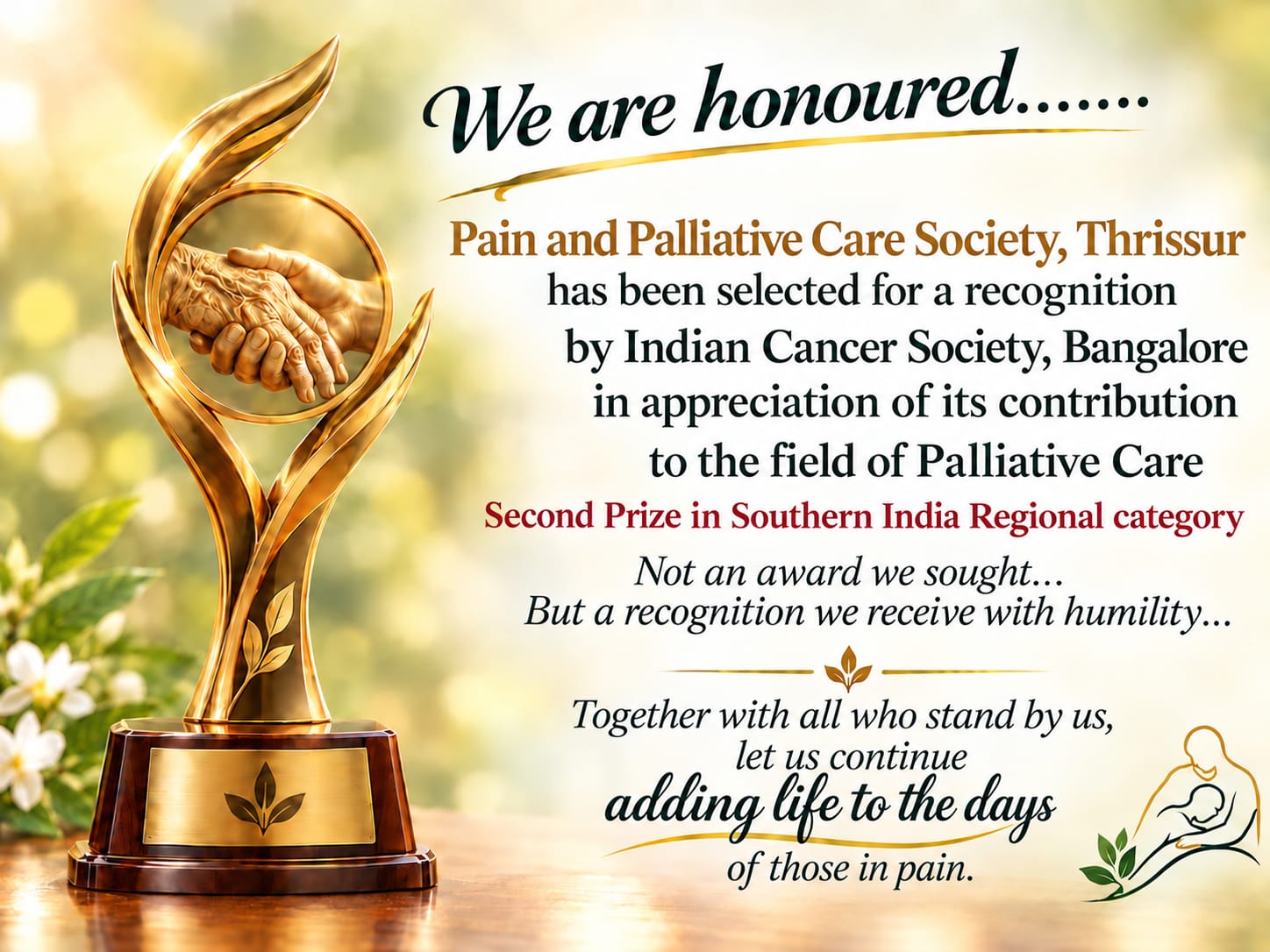
The Pain and Palliative Care Society (PPCS), Thrissur has been selected for a recognition by the Indian Cancer Society, Bangalore, in appreciation of its contribution to the field of Palliative Care. PPCS Thrissur has been awarded the Second Prize in the Southern India Regional category.
PPCS Thrissur supports people living with prolonged debilitating illness through its outpatient clinic, inpatient unit, home care, hospice and daycare, and rehabilitation projects. Its mission is “Adding life to days”: to provide the best possible holistic care, made affordable through community participation. The Society also offers peer support groups, financial and educational assistance to families in need, and paediatric palliative care. Its Institute of Palliative Care is approved by the Government of Kerala for training in palliative care.
We extend our heartfelt congratulations to the Pain and Palliative Care Society, Thrissur on receiving this well-deserved recognition.
Dr Biju Raghavan Conferred Fellowship of the Geriatric Society of India
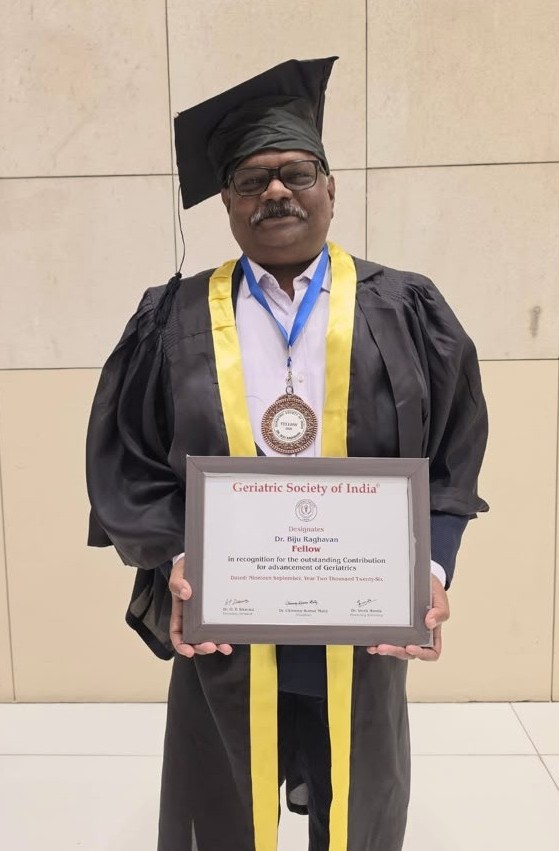
Dr Biju Raghavan (Senior Consultant and Head of the Department, Pain and Palliative Medicine , Rajagiri Hospital, Aluva, Ernakulam) has been designated as Fellow of the Geriatric Society of India, in recognition of his outstanding contribution to the advancement of Geriatrics. At Rajagiri Hospital, his department runs a palliative home care service in an area of about 15 km around the hospital, supported by the Rajagiri Karunya Trust.
He received his specialist training in Pain and Palliative Care at Amrita Institute of Medical Sciences, Kochi (2003–2006), and later served as a palliative care consultant at Alpha Charitable Trust, Thrissur, Pallium India- Thiruvananthapuram and KIMS, Thiruvananthapuram before joining Rajagiri Hospital.
We extend our heartfelt congratulations to Dr Biju Raghavan on being conferred Fellow of the Geriatric Society of India.
Closing the Gap: A New Beginning for Paediatric Palliative Care in Bengaluru, India
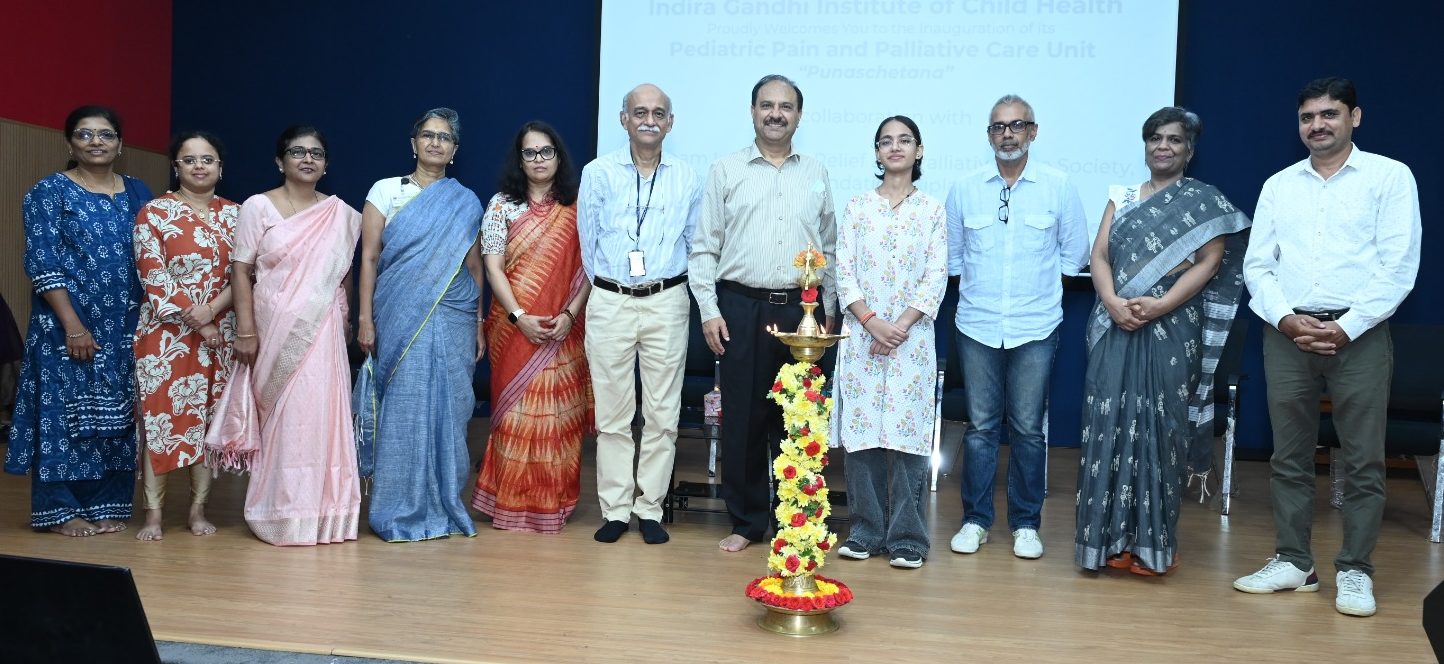
September is Pain Awareness Month, and this year’s call to Understand, Advocate, Partner, Advance carries special meaning for the team behind a new paediatric palliative care initiative in Bengaluru. On 5 September 2026, the Paediatric Pain and Palliative Care Unit “Punaschetana (Rejuvenation)” was inaugurated at the Indira Gandhi Institute of Child Health (IGICH), a small but important step towards making paediatric palliative care more accessible within the public healthcare system. The guests of honour at the inauguration were: Dr Narendra Babu (Director, IGICH), Dr Alkarani T. Patil (Professor and HOD, Paediatric Medicine, IGICH), Dr Nandini Vallath (Professor and HOD, Pain and Palliative Medicine, SJNAHS), Dr Raj Kumar Khatri, IAS (Retd.), Mr Sudheesh Venkatesh (Azim Premji Foundation), Mr Anish Ramachandran (Co-founder and CEO, Saranam India).
Virtual messages were also received from Dr Gayatri Palat (Professor and HOD, Palliative Medicine, MNJIO, and Founder Member, PRPCS, Hyderabad), and Dr Spandana Rayala (Associate Director, Sunflower Children’s Network, TWCC).
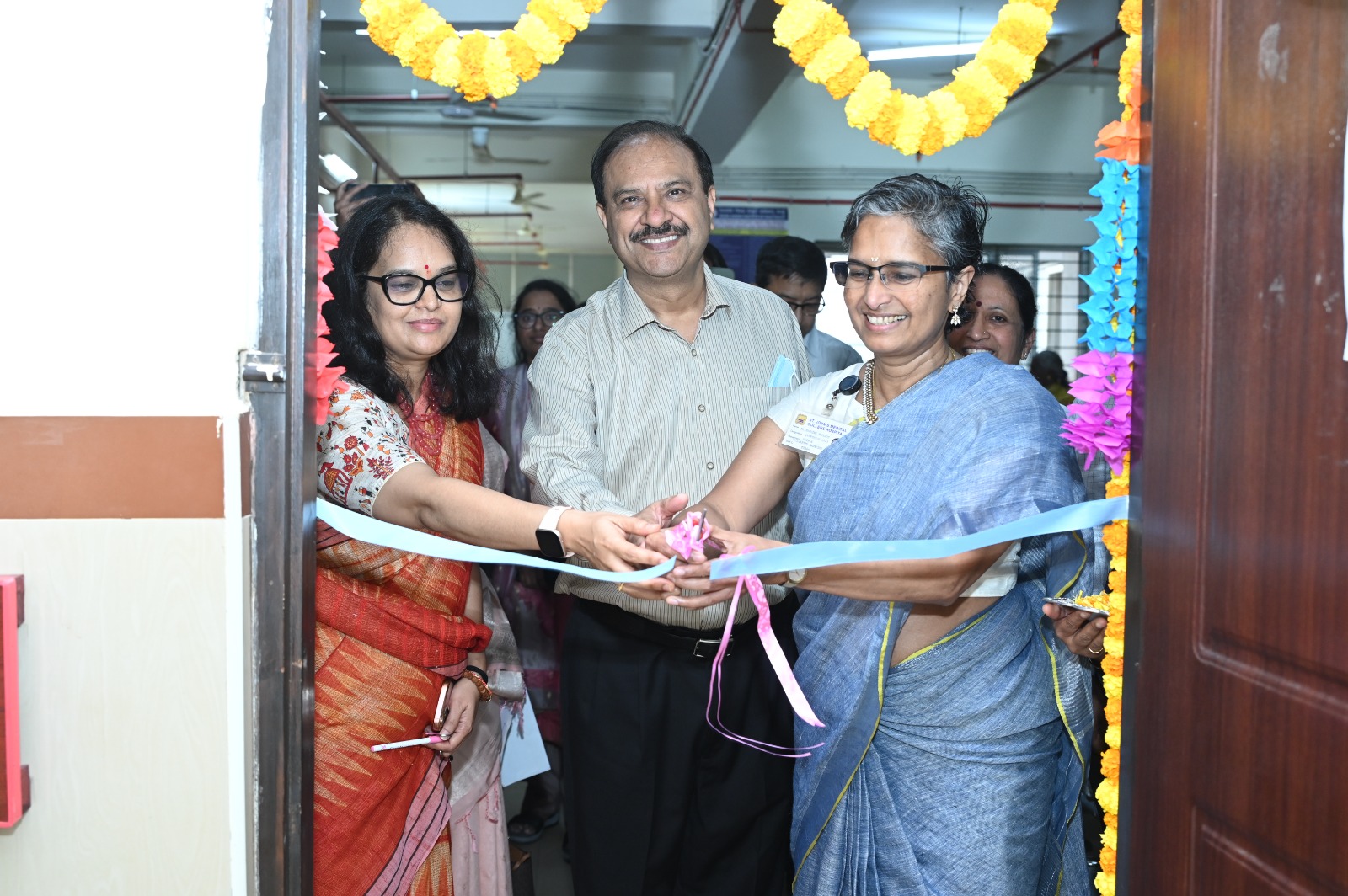
One of the most meaningful moments was the co-inauguration of the unit by a child, Minnat Singh, together with her father Sonvir Singh, whose lives have already been touched by the team’s palliative care services. It was a humbling reminder of whom this work is ultimately for.
IGICH serves children from Karnataka and neighbouring states. The programme will work towards dedicated outpatient, inpatient and home-based palliative care, with timely pain and symptom relief, psychosocial support and continuity of care.
This Childrens’ Palliative Care Program has come together through the collective efforts of IGICH, Saranam India (The Sheltr Foundation), Pain Relief and Palliative Care Society, Hyderabad, Azim Premji Foundation and Cipla Foundation, with the support of many clinicians, mentors, caregivers and well-wishers. As the inauguration fell on Teachers’ Day, the team also expressed gratitude to the teachers and mentors who have shaped their learning, inspired this vision and continue to guide them.
The team led by Dr Anuradha Ganigara (Programme Director) and Dr Nikhila Karanth (Clinical and Programme Lead) hopes that, with time, the programme will grow into a Centre of Excellence in Paediatric Palliative Care, contributing to care, education, training, research, advocacy and systems strengthening.
We extend our warmest congratulations to the team at IGICH and all partners on the launch of Punaschetana. By bringing pain relief and compassionate palliative care to children in the public healthcare system, this unit offers hope to many young patients and their families. We wish the team every success in growing this beginning into a Centre of Excellence, and thank them for their service.
One Year of Manipal Hospice and Respite Centre: Building a University Ecosystem for Palliative Care
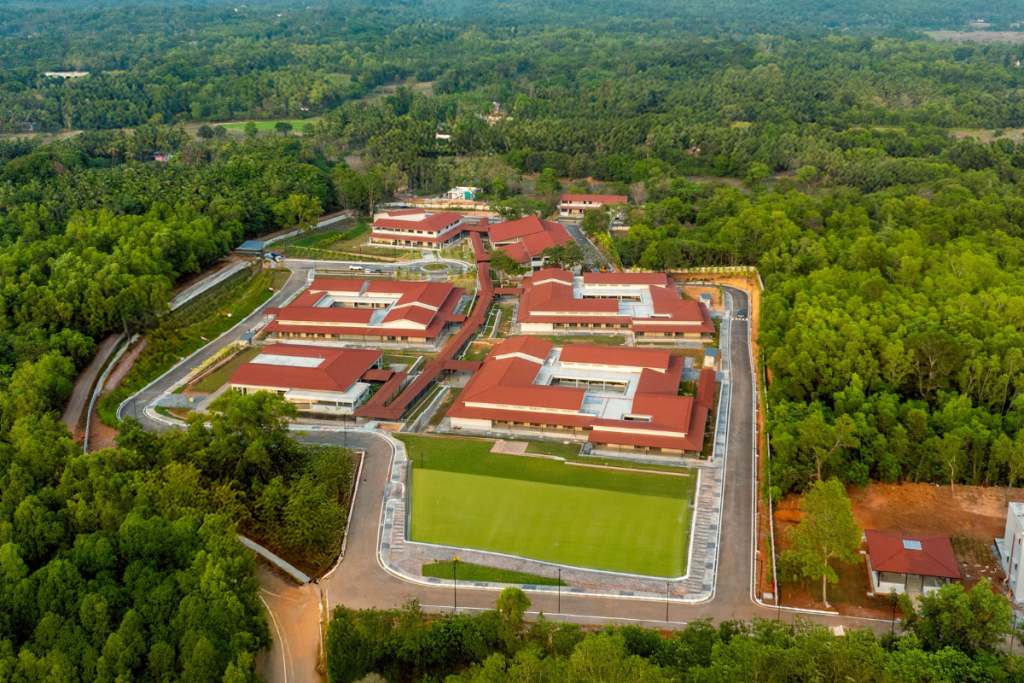
Manipal Hospice and Respite Centre (MHRC), a constituent unit of Manipal Academy of Higher Education (MAHE), completed its first year of service on 1 September 2026. Dr Seema Rao (Director and Consultant in Palliative Medicine, MHRC, MAHE, Manipal), shares with us the centre’s one-year journey.
A hospice is often imagined as a place people come to when nothing more can be done. At Manipal Hospice and Respite Centre (MHRC), the first year has been about challenging that perception, showing that even in the face of serious illness, there is much that can still be done to relieve suffering, support families, restore function, create meaning, build community and help people live as fully as possible.
When MHRC, a constituent unit of Manipal Academy of Higher Education (MAHE), admitted its first patient on September 1, 2025, the vision extended beyond inpatient hospice care. The aim was to bring together specialist palliative care, respite care, rehabilitation, bereavement support, education, research, humanities and community participation within the wider strengths of a multidisciplinary university.
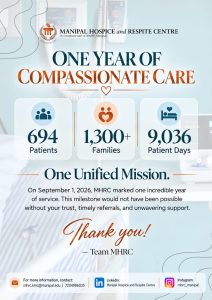
One year later, that vision is taking visible shape.
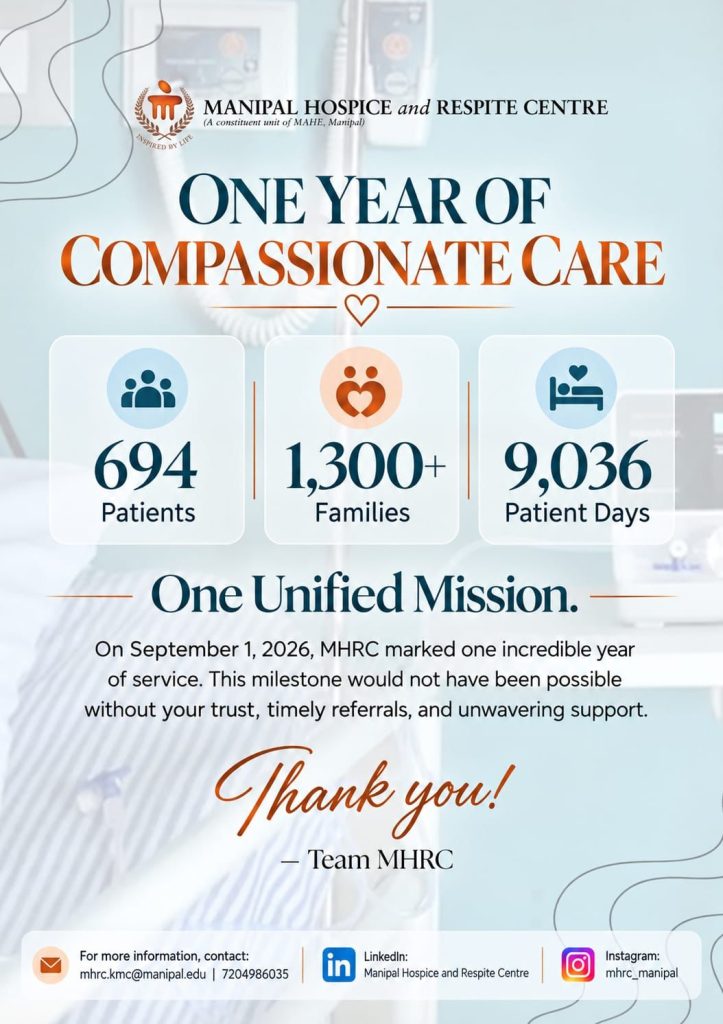
Beginning with 15 operational beds and progressively expanding to 40, MHRC has cared for more than 700 patients and supported over 1,500 caregivers. Care is provided entirely free of cost and extends across diagnoses, including advanced cancer, progressive neurological disorders, traumatic brain injury, advanced cardiac, respiratory and renal diseases, frailty and other life-limiting conditions. MHRC is distinctive in being led by a specialist palliative care team, with multidisciplinary expertise guiding symptom control, communication, decision-making, psychosocial support and end-of-life care.
A central component of the MHRC model is respite care. Families caring for people with advanced illness often provide prolonged and intensive support with little opportunity for rest. Short-term respite admission allows caregivers to recover physically and emotionally, attend to other responsibilities and regain confidence before continuing care at home. The focus therefore extends beyond the patient to sustaining the family as a whole.
An important and distinctive feature of MHRC is the integration of rehabilitation within palliative care. A dedicated Therapy Block, equipped for physiotherapy, occupational therapy, and speech and language rehabilitation, enables coordinated multidisciplinary rehabilitation tailored to each patient’s functional abilities, goals and quality-of-life needs.
Care also addresses the emotional, social and spiritual dimensions of serious illness. Psychosocial and spiritual support is offered to patients and families throughout the illness journey, helping them cope with distress, uncertainty, changing roles and questions of meaning. Care continues beyond death through bereavement support, recognising that families may continue to need guidance, connection and support after the loss of a loved one.
The university setting gives MHRC a distinctive breadth. Colleges and disciplines across humanities, technology, management, communication, commerce, nursing, public health and other health sciences contribute through academic projects, volunteering, creative engagement, communication initiatives and community outreach. This brings students from very different professional backgrounds into conversations around serious illness, caregiving, dignity, death and dying.
Student and volunteer participation has become an important part of life at MHRC. Student clubs organise awareness activities, creative programs and volunteering initiatives for patients and caregivers. Philanthropic and service organisations contribute through music, companionship, celebrations and community activities, helping MHRC remain closely connected to the wider community.
Research is another important pillar. As a university-linked hospice, MHRC provides opportunities for interdisciplinary work in palliative care, caregiving, rehabilitation, psychosocial and spiritual care, communication, bereavement, quality improvement and health systems. Clinical care, education and research are intended to inform one another, with questions arising from bedside experience and evidence returning to practice.
Training and capacity building are similarly integral, with healthcare professionals, students, volunteers and visiting teams participating in structured learning, observerships and professional development.
The emotional wellbeing of staff is also recognised. Samwaad: The Holding Space provides reflective debriefing opportunities where team members can discuss difficult clinical encounters and the emotional impact of caring for people with serious illness and dying.
MHRC has also become a place of community and celebration. Festivals, art, music, caregiver activities, student initiatives and awareness programs bring patients, families, staff and visitors together. Visits by prominent public figures have further helped extend awareness of hospice and palliative care beyond the healthcare community.
Growth continues through a phased model of expansion. The current 40-bed service is planned to increase to 65 beds this year, with greater emphasis on neuropalliative care, and subsequently to 110 beds in 2027, while preserving quality, specialist oversight and multidisciplinary care.
MHRC’s first year shows what becomes possible when clinical care, respite, rehabilitation, bereavement support, research, education, creativity, student participation and community engagement are brought together around the person and family. As MHRC enters its second year, its aspiration remains simple: to ensure that serious illness does not take away comfort, dignity, connection or the possibility of living meaningfully.
Warmest congratulations to the entire team of Manipal Hospice and Respite Centre on completing a remarkable first year. By offering free, specialist and compassionate care to patients and families, and by bringing a whole university into the conversation on serious illness, MHRC has set an inspiring example for the palliative care community. We wish the team continued success as they begin their second year.