


They Lifted Her When Others Would Not
– Dr Chhaya Chandrasekhar, New Delhi
Usha died quietly. But the silence around her was full of questions.
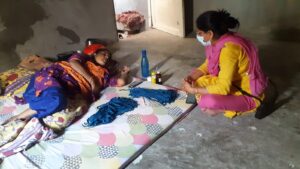
I had watched her illness in pieces, a young woman with cancer of the buccal mucosa, never treated, growing weaker because poverty kept closing doors. Her husband, already disabled, moved from hospital counter to counter, holding on to dignity with tired hands. Four children waited at home with a neighbour.
Usha died the way many poor women die in our country. Not because medicine didn’t exist, but because reaching medicine needs money, literacy, transport, strength, and someone to guide you through the maze. She had none of these. They lived on the edge of everything, raising children between hunger and hope.
Their life reminded me of something we say in meetings but don’t always feel in our bones. Yes. Social conditions often decide health more than any drug. Poverty, disability, gender roles, and lack of support can quietly decide outcomes long before we doctors meet the patient.
After she died, we entered another world, one where medicine has no chart to follow. At the crematorium, the system asked for money. Relatives stepped back. Her husband couldn’t carry her. The short walk from ambulance to pyre felt endless. And then a nun and a volunteer stepped forward. They lifted Usha when others would not. They stood beside her children. They argued when dignity had a price tag. They paid when there was no choice. They stayed when everyone else left. That day I understood something deeper about volunteers and palliative care.
Palliative care is not only medicines, injections, oxygen, or charts. It does not end when breathing stops. It walks with families into grief, into rituals, into the confusing days after loss. It is presence when systems are silent. Palliative care is advocacy when corruption steals dignity. It is kindness that continues after the last breath.
Volunteers are the living heart of this care. They fill the gaps medicine cannot close. They arrange food, transport, papers, school fees. They sit beside the dying when families are exhausted. They listen to life stories, they carry bodies with respect. They make sure suffering is seen, not hidden. They walk without title, without salary, without recognition, carrying grief, carrying bodies, carrying stories.
Because cure is not always possible but definitely care is.
Because dying is not only medical, but also human.
Because dignity should not depend on money or strength.
Usha taught us something simple and deep. Autonomy is not just signing a DNR or a living will. It is having enough support to choose without fear. It is knowing someone will stand beside you. In India, where care is uneven and expensive, volunteers make choices real. Models like Neighbourhood Network in Palliative Care (NPPC), Delhites’ National Initiative in Palliative Care (DNIPCare) and other volunteer-driven community palliative work show how ordinary people protect dignity in extraordinary ways.
As a palliative care doctor, I have seen many Ushas. Each story is different, yet painfully familiar. They remind me that healthcare is not only about hospitals. It is about who shows up when the world becomes heavy. Volunteers showed Usha she was not alone. They showed her children that kindness still exists. They showed us what palliative care truly means. Not abandoning when cure ends. But walking together until the very last moment and a little beyond. They remind us that compassion is not an optional extra in healthcare, but it is the core. Their presence turns silent suffering into shared truth. They carry stories back into the world so society cannot pretend it did not know. As a palliative care community, we often stand in morally grey spaces — between hope and realism, between treatment and letting go. In those spaces, volunteers are our compass. They anchor autonomy in relationship.
They tell patients, “You are not alone.” And sometimes, that is the most powerful medicine we have.
About the Author:
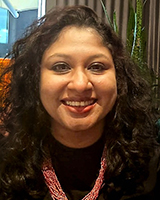
Dr. Chhaya Chandrasekhar is currently serving as a palliative care physician at Shanti Avedna Sadan Hospice, Delhi. She trained through International Palliative Care Fellowship at the Institute of Palliative Medicine, Kozhikode, and previously worked with CanSupport , Delhi and DNIPcare(Delhi) in home-based care. Passionate about policy advocacy for marginalized patients, she also loves philosophy, painting, and illustration, and hopes to deepen ethical, effective pain management for cancer patients with addiction.
Leave a comment