


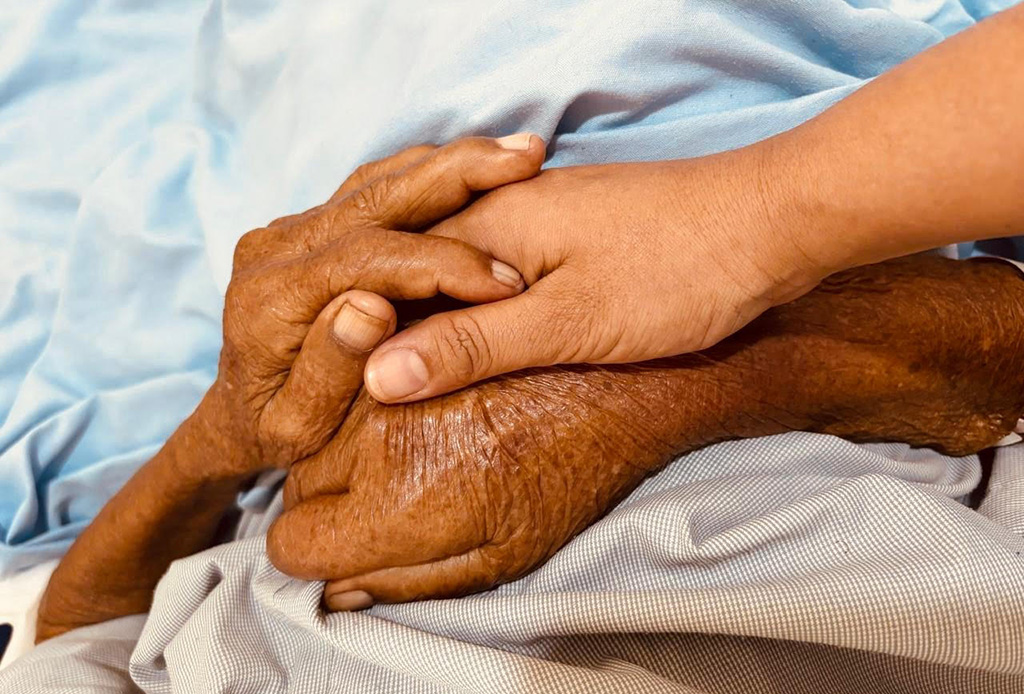
The Death of Ivan Ilyich: A Literary Mirror to Palliative Care
– Ms Keshav Sharma, New Delhi
How a 138-year-old novel remains the most accurate map of dying I have encountered in my clinical practice!
In 2026, I sat across from a 52-year-old man dying of pancreatic cancer in a private hospital in a metropolitan city. Rajesh, successful corporate lawyer, meticulous planner, devoted father, looked at me with hollow eyes and said, “Everyone keeps asking how I’m feeling physically. No one asks about this.” He tapped his chest. “The terror in here. The feeling that my whole life has been… wrong somehow.”
I recognised his words immediately. Not from my clinical training, not from contemporary psycho-oncology literature, but from Leo Tolstoy’s 1886 novel “The Death of Ivan Ilyich” a text that, after many years working in palliative care and psycho-oncology, I consider the most clinically accurate account of psychological dying ever written.
This is not literary hyperbole. This is clinical observation.
Why a 19th Century Russian Novel Belongs in Every Palliative Care Curriculum?
When I teach young psycho oncology aspirants, psychology interns, I assign “The Death of Ivan Ilyich” before any textbook.
The resistance is predictable: “Why are we reading fiction? Give us the research, the evidence base, the protocols.”
Then they read it. And they understand.
Tolstoy wrote what we in palliative care witness daily but struggle to articulate: the specific texture of existential suffering, the particular isolation of terminal illness, the ways families perform care while fleeing from its emotional demands, the moment-by-moment psychological disintegration and occasional transcendence that constitutes dying in modern society.
The novel isn’t just literature. It’s an ethnographic account, a phenomenological study, a clinical case presentation of such precision that I regularly reference it in consultations.
The Psychological Autopsy: What Tolstoy Saw That We’re Still Learning

The Conspiracy of Normalcy
Ivan Ilyich falls, injures his side, and develops unrelenting pain. The first response — his own and his family’s is to minimize, normalize, explain away. “It’s nothing serious. It will pass.”
Last month, I worked with Priya, a 45-year-old woman with metastatic breast cancer. Her family maintained an elaborate fiction that she was “getting better,” discussing her as though she would attend her daughter’s wedding in six months. Priya participated in this charade daily, only breaking down when alone with me: “They need me to pretend. But I’m so tired of pretending.”
Tolstoy understood what Elisabeth Kübler-Ross would formalize decades later: denial isn’t simply psychological defence , it’s a social contract. Families need the patient to collude in the fiction of normalcy because the alternative that someone they love is dying - is unbearable. The patient, sensing this need, often complies even as it deepens their isolation.
In our work, we call this the “elephant in the room” phenomenon. Tolstoy called it “the lie”:
“What tormented Ivan Ilyich most was the deception, the lie, which for some reason they all accepted, that he was not dying but was simply ill, and that he only need keep quiet and undergo a treatment and then something very good would result.”
This passage should be required reading for every oncologist who tells dying patients to “stay positive” or every family member who insists “we don’t talk like that” when a patient tries to discuss death.
The Medicalization of Suffering: When Doctors Become Technicians
Tolstoy’s portrayal of Ivan’s physicians is devastating in its contemporary relevance. They examine, diagnose, debate procedures , everything except acknowledge the terrified human being before them.
The doctor’s attitude seemed to say: ‘If you would just put yourself in our hands and stop asking these irrelevant questions about dying, we’ll take care of everything according to our science.’”
I have sat in tumour boards where a patient’s scan was projected on-screen — tumour measurements discussed, treatment options debated, statistics cited — and not once did anyone mention the patient’s name or their emotional state. The person became the disease.
Just last week, a colleague presented a case: “68-year-old male, Stage IV NSCLC, ECOG 3, failed two lines of therapy…” I interrupted: “What’s his name? What does he do? What’s he afraid of?”
Silence. Then, “I… I’m not sure. Let me check the chart.”
Tolstoy saw how medicine could become a flight from the reality of death rather than an engagement with dying persons. Our technological sophistication has only amplified this tendency.
The Ontological Emergency: When Your Whole Life Becomes Questionable
The most psychologically precise aspect of Tolstoy’s novella is Ivan’s middle-of-the-night insight that perhaps his entire life — his career, his marriage, his values — was fundamentally wrong. Not just mistaken, but a kind of existential error.
“Maybe I did not live as I ought to have done… But how could that be, when I did everything properly?”
This moment, what existential psychotherapists call an “ontological crisis” – is not depression. It’s not denial. It’s a fundamental questioning of meaning precipitated by mortality’s approach.
I see this regularly. The CEO who realizes he spent 30 years building something he didn’t care about.
The woman who lived for her children’s approval and now wonders where she went.
The man who followed every rule and feels he somehow missed the point entirely.
Conventional grief models don’t capture this. We talk about stages, tasks, adaptations. But what about the patient who faces death and realizes they’re not sure they ever truly lived?
Tolstoy understood that terminal illness doesn’t just threaten biological existence — it interrogates biographical existence. Have I lived rightly? Has my life mattered? Was any of it real?
In our secular, materialist culture, these questions emerge with particular intensity. Ivan has no robust spiritual framework to contextualize suffering, no narrative that makes dying meaningful. Sound familiar?
The Architecture of Isolation: How Families Flee While Seeming to Stay
The Performance of Care
Tolstoy details how Ivan’s wife Praskovya performs the role of dutiful spouse while remaining emotionally absent, even resentful. She arranges doctors, manages medications, maintains appearances — but never truly sees her dying husband.
I watched this same dynamic play out last year with a patient named “Z”. His adult children visited daily, brought food, hired nurses, posted updates on family WhatsApp groups about his “fighter spirit.” But when Z tried to talk about his fears, they changed the subject. When he mentioned dying, they insisted he was “giving up.”
During a family meeting, I asked them directly: “When did you last ask your father what he’s actually experiencing?”
Blank stares. Then tears. They genuinely believed they were caring for him. They were exhausting themselves caring for him. But they weren’t with him.
Tolstoy shows us the difference between physical proximity and emotional presence, between managing dying and accompanying the dying person.
The Question No One Asks
Throughout the novella, Ivan desperately wants someone to acknowledge his reality, to ask simply: “What is this like for you?” No one does, except Gerasim, the peasant servant.
In my work, I have found that the most therapeutic intervention is often the simplest: “Tell me what dying feels like for you right now.”
Patients weep, not from sadness necessarily, but from relief that someone finally asked. That someone is willing to hear the answer. That they’re not required to protect others from their reality.
Medical anthropologist Arthur Kleinman calls this “witnessing illness.” Tolstoy demonstrates it’s the rarest and most precious form of care.
Gerasim: The Subversive Power of Simple Presence
The most clinically instructive relationship in the novella is between Ivan and Gerasim, his peasant servant. While everyone else maintains elaborate fictions and emotional distance, Gerasim provides simple, honest care:
“Gerasim alone did not lie; everything showed that he alone understood the facts of the case and did not consider it necessary to disguise them.”
Gerasim holds Ivan’s legs to ease pain. He stays through the night. He acknowledges death without fear or drama. He provides what palliative care literature now calls “compassionate presence.”
I encourage young practitioners: “Be Gerasim.” Not the brilliant diagnostician, not the cure-bringer, but the person willing to sit with suffering without needing to fix or flee from it.
Last year I supervised a young psychologist, working with her first dying patient. She came to supervision anxious: “I don’t know what to say. Nothing I learned helps. She’s dying and I can’t fix it.”
“Good,” I told her. “Now you can actually help.”
She learned to simply be present – no interventions, no reframing, no techniques. Just presence. The patient told her weeks later: “You’re the only person who doesn’t need me to pretend.”
This is Gerasim’s lesson: Sometimes the most therapeutic response to suffering is acknowledgment rather than intervention.
The Question of Redemption: Does Meaning Emerge at the End?
The novella’s ending is controversial. In his final hours, Ivan experiences something like spiritual breakthrough — he sees his life differently, feels compassion for his family, and dies with a sense of liberation.
Some readers find this redemptive. Others see it as sentimental. As a palliative care practitioner, I find it clinically accurate: not because everyone achieves transcendence, but because consciousness often shifts near death in unexpected ways.
We have witnessed patients who were bitter and frightened for months suddenly become peaceful in their final days. Families report deathbed words of profound lucidity and love. Neurologically, we’re beginning to understand terminal lucidity and pre-death surges of consciousness.
But I have also sat with patients who died terrified, confused, or angry. Death doesn’t automatically grant wisdom or peace.
What Tolstoy captures is possibility — that even in extremis, psychological shifts can occur. That meaning can emerge retrospectively. That awareness of death sometimes clarifies what matters.
This isn’t guaranteed. It’s not prescriptive. But it’s possible. And that possibility matters clinically because it prevents therapeutic nihilism: the assumption that once someone is dying, psychological work is pointless.
What Has Changed (and What Hasn’t) Since 1886
What’s Different:
Medical Technology:
Ivan died without effective pain management, without palliative care protocols, without access to psychiatric support or psychological interventions.
We now have:
- Sophisticated pain management
- Palliative care as a medical specialty
- Evidence-based psychotherapeutic approaches (Meaning-Cantered Therapy, Dignity Therapy, ACT)
- Medications for depression and anxiety
- Hospice systems
Social Changes:
We talk more openly about death (though not nearly enough). Death literacy movements are growing. Patient advocacy has improved informed consent and autonomy.
What Hasn’t Changed:
The Fundamental Terror:
No medical advance has eliminated the existential anxiety of mortality. We still die. We still know we die. And this knowledge still generates profound psychological distress.
The Isolation:
Despite palliative care teams, despite support groups, despite everything — dying is still often fundamentally lonely. Families still flee emotionally while seeming present physically.
The Medicalization:
We have only amplified the tendency to treat dying as a technical problem rather than an existential passage. More interventions, more options, more decisions — but often less acknowledgment of what’s actually happening.
The Questions:
Did I live rightly?
Does my life matter?
What happens after?
How do I say goodbye?
These haven’t changed in 138 years. Or 1,380 years.
Clinical Applications: What Tolstoy Teaches Modern Practitioners
For Physicians:
Read Chapter 6, where Ivan’s doctor examines him with technical precision while ignoring his terror. Then ask yourself: When did you last sit with a dying patient and ask not about symptoms but about their experience of dying?
Practical change:
In every consultation with a terminally ill patient, include one non-medical question: “What’s the hardest part of this for you right now?”
Then listen without trying to fix.
For Psychologists and Counsellors:
Ivan’s psychological journey isn’t linear. He cycles through denial, anger, bargaining, despair — sometimes within hours. He has moments of acceptance followed by renewed panic.
Practical change:
Abandon rigid stage models. Meet patients where they are in each session. Don’t push toward “acceptance” as though it’s a destination to reach.
For Family Members:
Notice how Ivan’s family’s avoidance increased his suffering more than the disease did. Their inability to acknowledge his dying made him profoundly alone.
Practical change:
Practice saying: “I know you’re dying, and I’m here with you.” Not “you’re going to beat this” or “stay positive.” Just truth and presence.
For Administrators and System Designers:
The novella illustrates how institutional structures can facilitate or obstruct good dying. Ivan has financial resources but still receives poor psychosocial care because no system exists to provide it.
Practical change:
Integrate psychosocial screening and support into routine oncology and palliative care. Make “Gerasim-ing” (compassionate presence) a billable, valued, systematized component of care.
The Contemporary Relevance: Three Patients Where Tolstoy Proved Prescient
Person 1: The Executive Who Lived Wrongly
A, 58, metastatic colon cancer. Spent 35 years building a business empire. As he declined, he told me: “I’m dying and I realize I barely know my children. I chose board meetings over bedtime stories. I chose deals over relationships. And for what? I can’t take any of it with me.”
This is Ivan Ilyich’s revelation. Tolstoy anticipated what we now know from near-death experience research and life review studies: confronting mortality often triggers radical reassessment of how life was lived.
Clinical Intervention: We did legacy work, video messages to grandchildren, ethical will, letters of apology and love. Not to “fix” his regret, but to honor it and create meaning from it.
Person 2: The Family That Couldn’t Say Goodbye
B, 67, lung cancer, weeks to live. Her family maintained elaborate cheerfulness — “Amma will be fine!” They discussed future plans, avoided the word “death,” changed subject whenever she tried to talk seriously.
Intervention: I recognized Praskovya’s performance of care. So I called a family meeting and said: “Your mother is dying. She knows it. You know it. Pretending otherwise is making her die alone even though you’re here.”
Anger. Tears. Then breakthrough. Her daughter finally said: “Amma, I’m so scared of losing you.” And B replied: “I’m scared too. Can we be scared together?”
That conversation, impossible until honesty broke through – allowed genuine goodbye.
Person 3: The Healthcare Team That Forgot the Person
I was called to consult on a “difficult” patient — “non-compliant, hostile, refusing recommended treatment.” I read the chart: 43-year-old woman, sarcoma, poor prognosis, offered experimental trial.
I visited her. Her name was Chanda. She was refusing the trial not because she wanted to die, but because it would take her across the country from her 8-year-old daughter for months. “They talk about survival rates. I want to know if I’ll make it to my daughter’s birthday. I want to know if this will give me quality time or just more time suffering. No one will answer that.”
The team saw a non-compliant patient. Tolstoy would have seen Ivan Ilyich — a human being asking for honesty about what matters and receiving only technical information.
Intervention: I facilitated a meeting where the oncologist finally said: “There’s a 15% chance this extends your life six months, but you’ll spend three months sick from treatment. If we do nothing, you probably have 4–6 months, and we’ll focus on quality.”
She chose comfort care. Died at home. Made her daughter’s birthday. The oncologist said afterward: “I thought honesty was cruel. Turns out the cruelty was in withholding it.”
What Tolstoy Understood That We’re Still Learning
After 138 years, “The Death of Ivan Ilyich” remains clinically relevant because Tolstoy grasped something essential: dying is not merely a biological event but a profound psychological, social, and existential transition.
What Dame Cicely Saunders called “Total Pain”.
He understood:
- That physical pain is often less unbearable than existential isolation
- That families’ inability to face death often increases the patient’s suffering
- That medicine can become a flight from rather than engagement with mortality
- That dying interrogates not just our future but our past , forcing questions about whether we lived authentically
- That the simplest presence is sometimes more therapeutic than the most sophisticated intervention
- That consciousness near death is unpredictable , despair and transcendence, terror and peace, can coexist or alternate.
Conclusion: Literature as Clinical Training
I often tell in my training’s: “If you only have time to read one thing before working with dying patients, read Tolstoy.”
Not because it’s great literature (though it is). Not because it’s philosophically profound (though it is). But because in 100 pages, Tolstoy maps the psychological territory of dying with more accuracy than most textbooks achieve in 500 pages.
He shows us what compassionate care looks like (Gerasim). He shows us what harmful care looks like (the doctors, the family). He shows us the patient’s inner world, the terror, the isolation, the existential questioning, the potential for late-life transformation.
Most importantly, he reminds us that dying patients need truth-tellers, not protectors; companions, not fixers; witnesses, not managers.
In 2026, with all our medical sophistication, we still struggle with what Tolstoy diagnosed in 1886: we don’t know how to be present with dying. We medicalize it, optimize it, manage it, everything except simply acknowledge it and sit with the person experiencing it.
Rajesh, the lawyer I mentioned at the beginning, read “The Death of Ivan Ilyich” at my suggestion. He returned to our session and said: “This writer from 150 years ago understands me better than anyone alive. How is that possible?”
Because suffering is universal. Because mortality is universal. Because the questions death raises - about meaning, authenticity, connection, legacy , transcend time and culture.
And because Tolstoy had the courage to look directly at dying without flinching, without sentimentalizing, without explaining it away. He witnessed it honestly. He wrote it honestly.
As clinicians, we can do no less.
When I supervise new palliative care professionals, I give them three assignments: shadow an experienced hospice nurse, attend a death, and read “The Death of Ivan Ilyich.” These three experiences teach what no textbook can, what dying actually looks like, feels like, requires from those of us who accompany the dying.
Tolstoy understood that death reveals life. How we die reflects how we lived. And how we care for the dying reflects who we are.
That understanding, articulated in 1886, remains the foundation of everything I practice in 2026.
About the Author:

Ms Keshav Sharma is a psycho-oncologist and grief therapist with extensive experience in palliative care, mental health, oncology, and bereavement support. She currently serves as the Director – Psychosocial Services at CanSupport. Keshav has led psycho-oncology services across leading healthcare institutions and has established impactful mental health and cancer support helplines. A seasoned trainer, speaker, and mental health professional, she has conducted 1000+ workshops and contributed to national and international conferences, advocacy initiatives, and research in psycho-oncology and palliative care. Driven by a vision of grief literacy and compassionate care, Keshav works towards building empathetic, patient-centered healthcare systems while advancing holistic psychosocial support for patients, caregivers, and healthcare professionals.


Leave a comment