


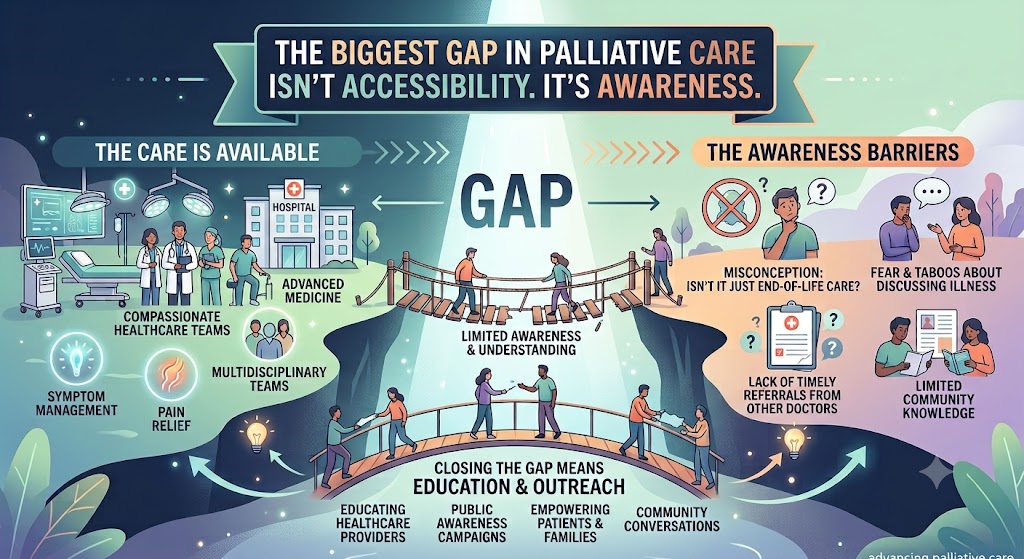
The Biggest Gap in Palliative Care isn’t the accessibility, it’s Awareness
Ms Riddhi Tomar, Poanta Sahib, Himachal Pradesh
If someone had asked me what palliative care meant a couple of years ago, I would have answered with complete confidence and I would have been completely wrong.
Like many people, I believed palliative care simply meant taking your loved one home when treatment had ended. In many ways, that belief was reinforced by the conversations we had during my father’s illness. We heard words that many families hear: “We’ve done everything we could. Now, take him home and leave the rest to God.”
In that moment, it felt as though the journey had reached its end, that everything that could be done had already been done.
Looking back, I realize that wasn’t entirely true.
While treatment aimed at curing my father’s cancer was no longer possible, there was still so much that could be done for him. His comfort, dignity, and quality of life still mattered. We simply didn’t know that there was an entire field of medicine dedicated to helping people live as comfortably as possible with a serious illness.
One of the biggest misconceptions I carried was thinking of palliative care as the absence of treatment. I now understand that it is a form of treatment in itself. It doesn’t replace cancer treatment; it complements it. Its goal is to relieve pain, manage symptoms, and improve quality of life alongside ongoing medical care. And when curative treatment is no longer possible, palliative care doesn’t begin, it simply becomes even more important.
It took my father’s illness to teach me what palliative care really is. Palliative care is not just end-of-life care. It is active treatment.
Today, when I think of palliative care, I don’t just think of medicines or symptom management. I think of preserving dignity. I think of easing suffering. I think of helping people live as well as they possibly can for as long as they can. And I think of something I had never associated with palliative care before: communication.
One of the most important lessons I learned was to keep talking to my father, even when he couldn’t answer me the way he once did.
At first, it felt strange. I wasn’t sure whether he could hear me. But I spoke anyway. I told him about our day, about who had come to visit, about ordinary things happening around the house. Sometimes I simply sat beside him and held his hand.
Whether he could respond or not became less important than making sure he never felt alone.
Those conversations taught us something unexpected.
Even when words became difficult for him, he still found ways to tell us what he wanted.
One day, while we were talking to him, we realized he was asking for mangoes. He wanted all of us to eat them together.
By then, swallowing had become incredibly difficult. So we made him a mango shake instead. We drew it into a syringe and fed it to him slowly, a little at a time.
He enjoyed the taste.
It was the day his body had begun to shut down. Just a few hours later, he took his final breath. That was the last meal we shared together as a family. We ate slices of mango while he had his as a mango shake. Looking back, I wouldn’t have wanted it any other way.
It wasn’t just his last meal. It was a reminder that even in the final hours of life, comfort, connection, and small acts of love still matter.
When I think about palliative care now, I don’t just think about pain relief or medicines. I think about moments like that. A favourite flavour. A familiar voice. Holding someone’s hand. Continuing to speak to someone, even when conversations have changed. These moments may seem small, but they preserve something illness should never be allowed to take away, the person’s humanity.
One memory has stayed with me.
I remember making a post on Reddit asking doctors if there was anything more that could be done for my father’s cancer pain. I wasn’t looking for miracles. I was simply looking for answers. I was desperate.
That’s when some kind people directed me towards pain physicians.
Until then, I didn’t even know pain medicine was a medical specialty or that pain physicians could play such an important role in cancer care. That one conversation completely changed the direction of our journey.
Sometimes I wonder how different things might have been if we had been guided towards palliative care and pain management much earlier instead of finding our way through strangers on the internet.
That is what I mean when I say the biggest gap is awareness. It is not just a lack of awareness among patients and families. It is also about how, and when, conversations about palliative care happen within the healthcare system. Access to palliative care is not a privilege or a last resort. It is an essential part of quality healthcare, and every patient and family deserves to know that this support exists. Families shouldn’t have to discover this support by chance or after months of searching.
They should hear about it as part of the treatment journey, from the very beginning.
I often think about how much of my father’s suffering could have been eased much earlier.
His pain.
The nausea.
The vomiting.
His loss of appetite.
As caregivers, we accepted these as inevitable because we didn’t know there were ways to manage them better. Nobody explained what palliative care could offer or when it should become part of his treatment.
I genuinely believe palliative care should never be introduced only when treatment options become limited. It should be integrated into care from the time of diagnosis, alongside disease-directed treatment. Every patient and family deserves to know that this support exists.
In one sense, my family was fortunate.
We had internet access. We could read, ask questions, and look for information. Even then, we struggled to find the right answers.
That makes me think about families who don’t have the same access to information or the confidence to ask questions. If awareness was difficult for us, I often wonder how many families continue to suffer simply because they don’t know that pain and other symptoms can be managed.
This wasn’t my first experience of caregiving. Years earlier, I had walked a similar journey with my uncle. Going through these experiences changed me in ways I am still discovering.
I remember one ambulance ride with my father. Somewhere during that journey, while speaking to my sister, a thought crossed my mind:
Perhaps palliative care is my calling.
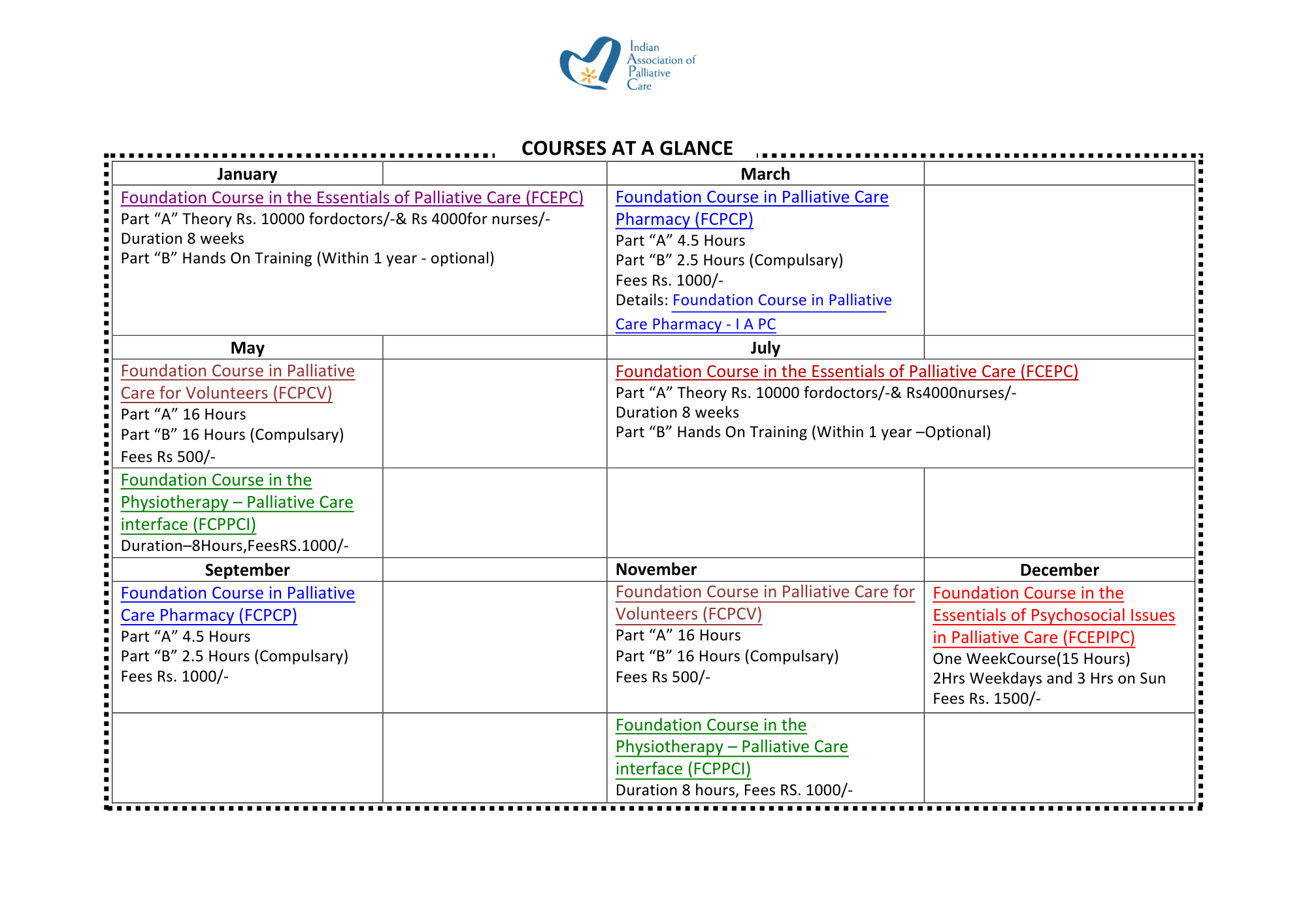
That thought stayed with me. It motivated me to enrol in a Foundation Course in Palliative Care. Although I had to withdraw after my father’s passing, my interest in the field has only grown stronger.
I don’t know exactly what my role in palliative care will be. I may never work at a patient’s bedside. But I do know this: I can write. I can share our story. And if doing so helps even one family learn about palliative care before they find themselves searching for answers the way we did, then that, too, is a meaningful way to contribute.
Looking back, I realize that the end of treatment was never the end of care. We simply didn’t know it then.
If sharing my family’s journey helps even one family discover palliative care sooner than we did, ask different questions, seek help earlier, or simply feel a little less alone, then telling this story will have been worth it.
In memory of my father, who taught me more about palliative care than any textbook ever could.
About the Author:

Riddhi Tomar is a blog writer and caregiver based in Himachal Pradesh, India. Her journey into palliative care began through caring for her father during his illness (metastatic hepatocellular carcinoma) and witnessing the realities of end-of-life care firsthand. She is currently learning and working towards understanding palliative care beyond medical treatment, with a focus on the emotional and human side of care-giving. Writing is her way of making sense of grief, caregiving, and the experiences that often remain unspoken.



Leave a comment