


Gratitude
Dr Ruparna Khurana, New Delhi
He was 39 and his cancer progressed faster than the family could fathom. Amidst anger, denial, bargaining and blame there was a man battling excruciating and unbearable pain. Like molten lava the pain engulfed his entire being. I remember his humour in middle of a pain crisis, his flashing a smile every time we greeted him good morning on the morning rounds.
There is something profoundly humbling about my specialty of palliative care. I have come to realize how the individuals we care for quietly become our greatest teachers. I feel extremely indebted to them for teaching me the most prized lessons of human existence and suffering without pride or prejudice, in life and even in death.
In the face of unimaginable suffering, relentless uncertainty, and bodies that have grown weary, they allow us into the most intimate, fragile and vulnerable corners of their lives. They welcome us into their worlds that are often breaking apart, trusting us with their fears, hopes, dreams, regrets and the darkest secrets. It is a privilege far greater than any degree or designation can ever bestow.
They let us sit beside them in silence, hold their hand when time is unbearably precious. They remember us when the pain becomes unbearable, believing we could help.
They teach us that the human spirit can endure pain beyond imagination and what indomitable spirit looks like. That dignity is not the absence of suffering, but the grace with which suffering is carried. That courage is often quiet. That resilience does not always roar—it sometimes simply smiles through tears and solemn prayers. In doing so, they gift us something sacred—a bond built not merely on medicine, but on trust, faith, and shared humanity.
Thank you for reminding us that faith can indeed move mountains—not always by changing outcomes, but by changing how we endure them.
Thank you for showing us that love persists even when everything else begins to fade. That when the world is slipping away, kindness still matters. That grace exists in the midst of despair. That families often discover extraordinary strength in the darkest of nights. That the human soul is far more resilient than the body it inhabits. That free will lies not only in choosing how we live, but also how we suffer—with quiet strength, with dignity, and sometimes with astonishing peace.
They remind us that NOT everything is lost.
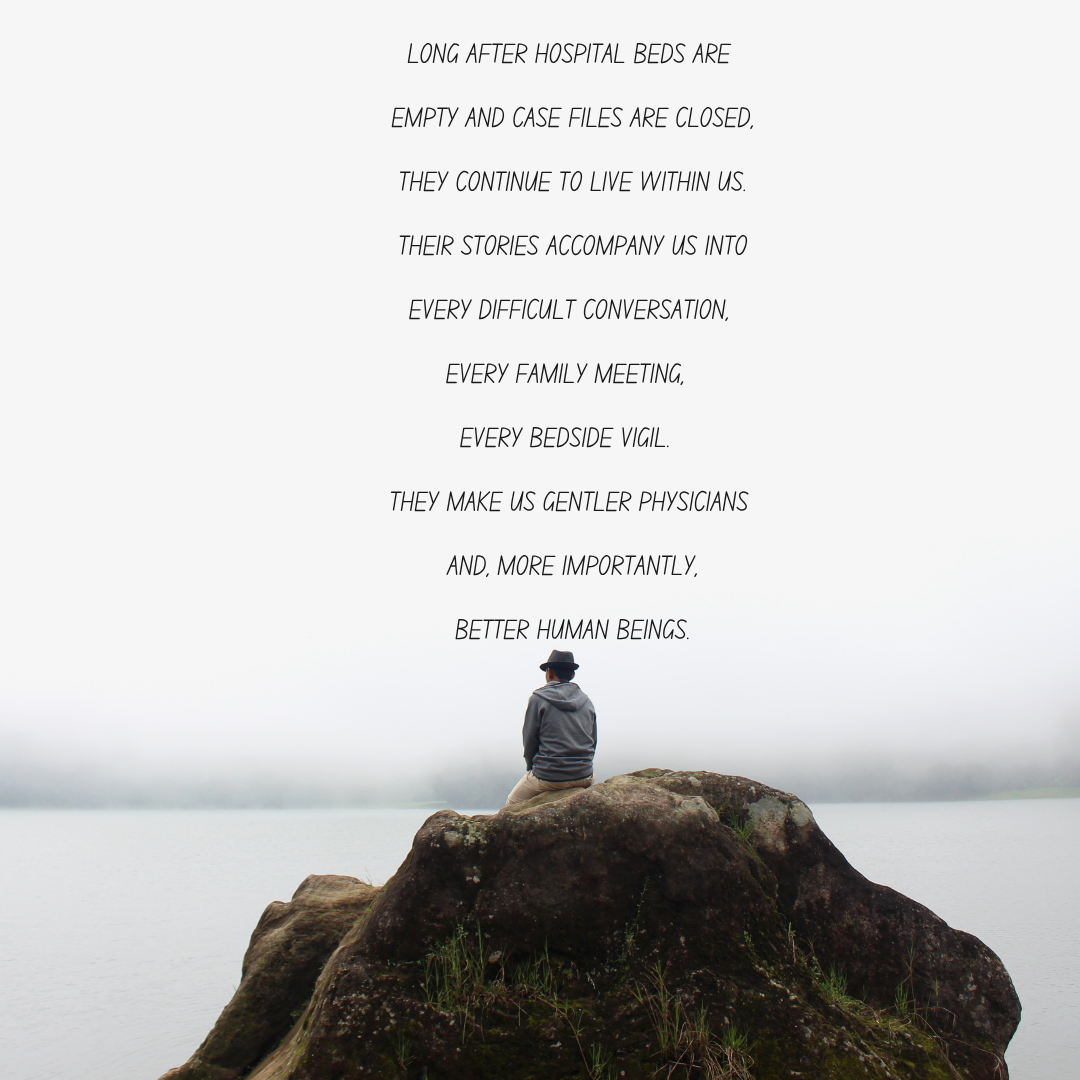
Long after hospital beds are empty and case files are closed, they continue to live within us. Their stories accompany us into every difficult conversation, every family meeting, every bedside vigil. They make us gentler physicians and, more importantly, better human beings.
The privilege of palliative care is not merely in easing suffering. It is in being invited into lives at their most vulnerable and crucial juncture, where masks fall away and only what truly matters remains.
Thank you for letting us walk beside you.
Thank you for letting us mourn with your families, for allowing us to embrace your loved ones when words could no longer offer comfort, and for reminding us that sometimes the greatest healing lies simply in not letting another human being suffer alone.
Your lessons cannot be found in textbooks. They are written instead in quiet smiles, trembling hands, tearful goodbyes, and moments of extraordinary grace. Every individual leaves behind something more enduring than a memory.
They leave behind a better doctor.
A better human being.
And for that, we remain forever grateful.
About the Author:

Dr Ruparna Khurana serves as an Associate Consultant in the Department of Palliative Medicine at Sir Ganga Ram Hospital, New Delhi. She is trained in Radiation Oncology and has specialized clinical experience in palliative medicine and end-of-life care. Her areas of interest include symptom management, communication in serious illness, advance care planning, caregiver support, and home-based palliative care. She is actively involved in clinical teaching, research, and the development and integration of palliative care services in India

Leave a comment