


Between Empty Chairs and Weathered Homes: A Psycho-Oncologist’s Journey
Ms Anamika Pandey, Delhi
Today, during a session with an elderly man receiving palliative care from our team, his 23-year-old son asked me a heartbreaking question:
“Does feeling like my father is already gone and preparing myself for his death make me a bad son?”
“What makes you say that you are preparing for his death?” I asked.
He mentioned that he had informed their relatives back in Bihar that “there is no more treatment for papa and we should take him home and do sewa.” In his mind, those words translated to a terrifying reality: he is dying very soon.
“How does that make you a bad son?” I gently probed.
He looked at me and said, “I could have done more. I could have tried another treatment.”
I asked him, “Have you ever seen a tree that is in full bloom all the time?”
“No,” he replied.
“Similarly,” I told him, “life and the journey through an illness are never the same. Some days are harder than others. Right now, you are doing the very best you can.”
This interaction stayed with me long after the session ended, leaving behind an unsettling realization: even after years of practice, I still struggle to find the exact words to capture grief. I find myself relying on metaphors and similes just to describe its shape.
Once, a caregiver told me, “Ventilators are the worst invention of mankind. They give families false hope that tomorrow my brother will wake up, call my name, and look at his wife with loving eyes.”
As a young mental health practitioner at the time, all I could do in that moment was sit in silence, listen to his soft sobs, and offer whatever quiet comfort or strength I could muster.
It was only much later that I truly understood how the harrowing cycle of ICU admissions and ventilator dependency can often be avoided, simply by introducing timely palliative care.
Illnesses like cancer do not just affect the patient; they dismantle the entire family, one member at a time.
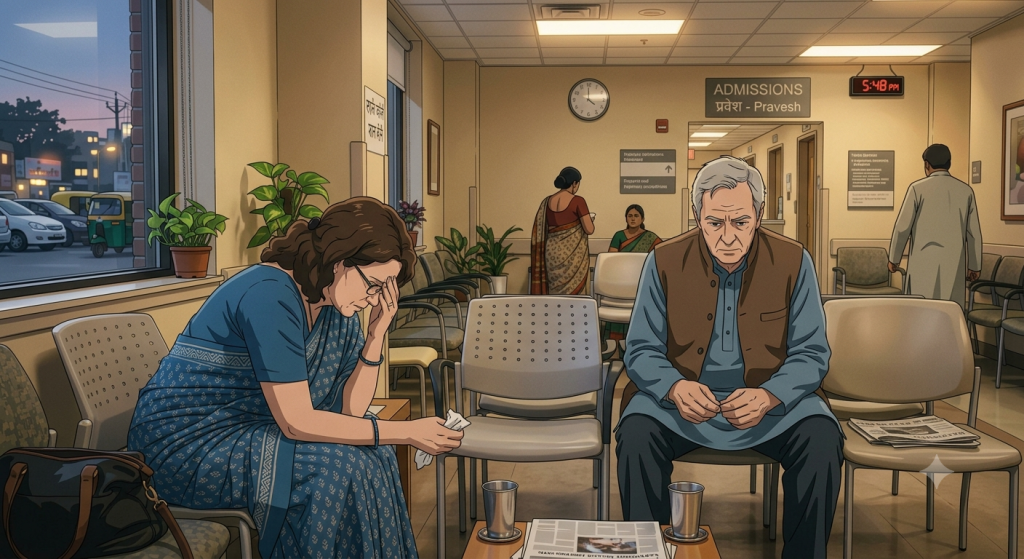
More often than not, it is beside empty chairs in waiting rooms or on uncomfortable recliners in hospital wards where the most vulnerable moments unfold; in spaces where fear, anxiety, loss, and hope all collide within a caregiver at once.
Walking through hospital corridors, I would see it every day: a terrified wife waiting for her husband to look at her just once more; a son holding himself together with everything he had, crumbling on the inside while waiting to hear his father’s voice.
In those moments, I would stop and simply hold their hand. And as soon as I did, all the fear, angst, and despair they had been holding so tightly would come pouring out in a flood of tears.
During COVID-19, when fear, loss, and grief echoed through every hospital corridor, another grieving caregiver shared a perspective that stuck with me: “Cancer would have given me five more months with my father. But now, I can’t even see him.”
Grief is a complex, tangled emotion. But it is not the only state of mind we confront as psycho-oncologists and palliative care psychologists. We also regularly cross paths with fear and demoralization, emotions that, from the outside, can sometimes seem trivial or irrational.
For instance, as someone grounded in logic, science, and psychology, I know that if a patient’s PET scans are clear and their oncologist gives them a clean bill of health, cancer has officially been defeated. Yet, that patient might remain terrified of it returning, or miraculously reappearing on the next scan.
To an outsider, this fear might seem unreasonable. But it exists nonetheless. It isn’t because the person lacks strength; it is because the trauma of suffering through cancer was so profound that even the slimmest chance of going through it again makes them lose faith in the good and the divine.
I was trained to recognize, understand, and validate these heavy emotions. Yet, as I continue working in oncology and palliative care, I constantly grapple with the limits of language. I often feel the weight of finding words that do not just provide temporary comfort, but also bestow enough strength to get out of bed and face another day.
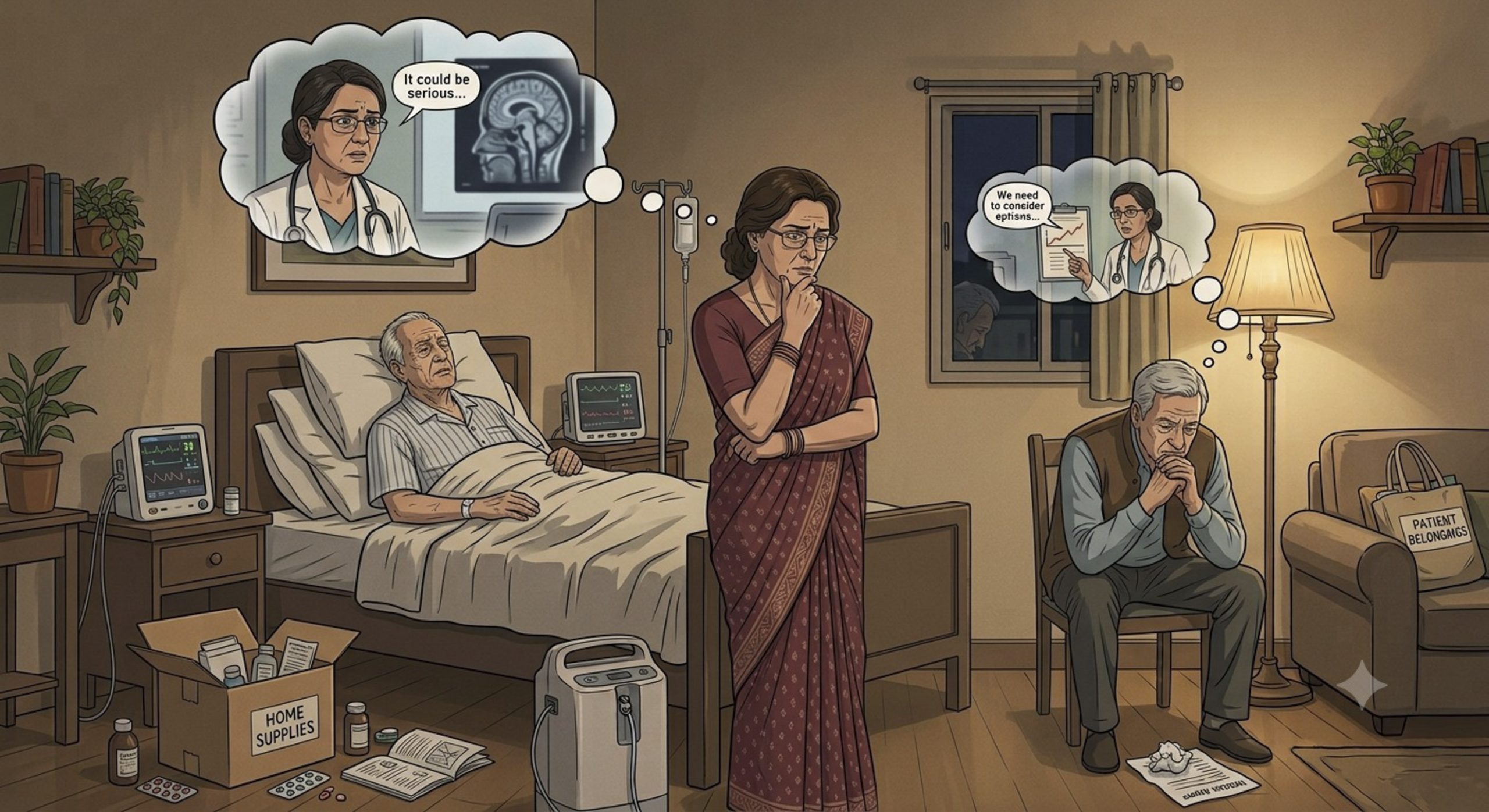
Since the pandemic, home care and palliative support have become far more accessible. But as I began conducting home visits and counseling families in their own spaces, I realized something important: the devastation, confusion, and anxiety seen in hospital wards only grew more intense behind closed doors.
In the quiet of their homes, anxious caregivers scrutinize every detail, from a doctor’s tone to the specific words they choose. This hyper-vigilance bleeds into their daily lives and shapes how they care for their loved ones.
In the end, we are all just trying to navigate the spaces between empty chairs and weathered homes, learning to sit with the silence when words aren’t enough.
About the Author:

Ms Anamika Pandey is a dedicated Psycho-oncologist and mental health professional with over a decade’s expertise in oncological care, palliative care and complex grief management. She is the founder of Nairujya Wellness clinic, Delhi, a specialised palliative, geriatric and cancer care counselling centre.
Anamika has held pivotal clinical roles at institutions including the Christian Medical College, Ludhiana and Antara Assisted Care Services, Gurgaon. She has previously served as the Deputy Director for Psychosocial Counselling at CanSupport, Delhi. She also serves as a co-opted executive committee member of the Indian Association of Palliative Care. She has been actively contributing to palliative care, with a focus on integrating behavioural therapies into end-of-life and geriatric care.


Leave a comment